
Sofia’s place in the Bulgarian Empire is best understood through its connections. Set between the Danube plain, the Balkan routes and the slopes of Vitosha, the city linked regions that rulers needed to govern and travelers needed to cross. Its medieval story includes periods of Bulgarian and Byzantine rule, with local religious and commercial life adapting to each political change.
A city shaped by its crossroads
Known as Serdica in antiquity and Sredets in the medieval period, Sofia became part of the First Bulgarian Empire after Khan Krum captured it in 809 and Khan Omurtag incorporated it into the state. The city’s location gave it strategic value between the central Balkan lands and the routes leading south. Control of Sofia meant influence over movement, communication and regional administration.
Sofia was one important city within the empire’s network rather than its sole political center. For visitors interested in how imperial history continues to shape places today, UNESCO World Heritage offers a useful comparison with Istanbul’s layered historic areas.
Power reached local communities
Empire was experienced through more than rulers and military campaigns. Churches, monasteries, local markets and the changing street pattern connected authority with everyday life. During the Second Bulgarian Empire, Sofia and its surrounding settlements grew economically and culturally. Monasteries around Vitosha formed a network of religious learning and community life sometimes known as Sofia’s Minor Mount Athos.
These institutions helped carry traditions through periods when the wider political map shifted. A personal tour can connect the central city with its surrounding sacred sites and explain how the landscape linked them.
A changing political map
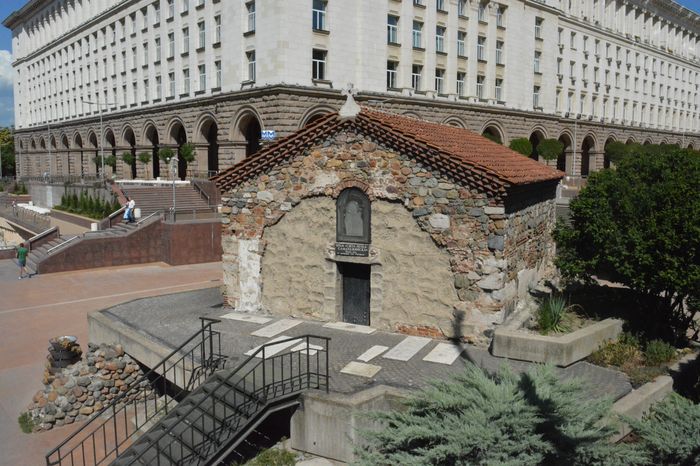
Sredets came under Byzantine rule during the 11th and 12th centuries before returning to the Second Bulgarian Kingdom after the 12th-century uprisings. The city prospered during the later medieval period. By the late 14th century, written sources began using the name Sofia, associated with the Basilica of St Sofia. This sequence shows how local history could move through several political settings while maintaining its importance.
For a cross-regional perspective on early Christian places, Biblical Turkey explores Ephesus and its role in the religious history of Turkey.
Read the region before the empire
Sofia’s history reaches further back than the medieval Bulgarian states. Serdica and the wider region were also shaped by earlier Thracian communities, Roman rule and later Byzantine influence. Knowing these layers helps a visitor see why the Bulgarian Empire inherited a place with long-established routes, settlements and cultural traditions.
To explore an earlier chapter of the region’s past, Thracian Civilization provides another lens on the area’s heritage. A guide can help distinguish which traces belong to the Thracian period and which to medieval Bulgaria, making the region’s long timeline easier to follow.
See the connections in person
A personal Sofia cultural tour can focus on whichever connection interests you most, from medieval rulers to monasteries and regional geography. The aim is to make the Bulgarian Empire’s local history clear while leaving room for your own questions. To plan a visit around your interests, use the separate Contact Us page.