Rila Monastery and Bulgaria’s Cultural Heritage
Rila Monastery is one of Bulgaria’s most important cultural landmarks. Set in the Rila Mountains, the monastery is known for its striking architecture, colorful frescoes, and long spiritual history. For visitors exploring Sofia and the surrounding region, a personal cultural tour offers a rewarding way to experience the monastery and understand its role in Bulgarian identity.
The complex combines religious spaces, residential buildings, and courtyards within a dramatic mountain setting. Its scale and decoration make it a memorable destination for travelers interested in history, architecture, and local traditions.
Discover the history of Rila Monastery
Tradition connects the monastery’s origins with Saint Ivan of Rila, a hermit who lived in the mountains during the 10th century. Over time, the monastery became a center of religious life and learning. Its history reflects the efforts of generations who preserved Bulgarian culture, language, and faith through periods of change.
The buildings visitors see today developed over many centuries, with major rebuilding during the Bulgarian National Revival. This layered history is visible in the complex’s design and decoration. A local guide can explain how the monastery changed over time and why it remains an important symbol for Bulgaria.
Admire the architecture and frescoes
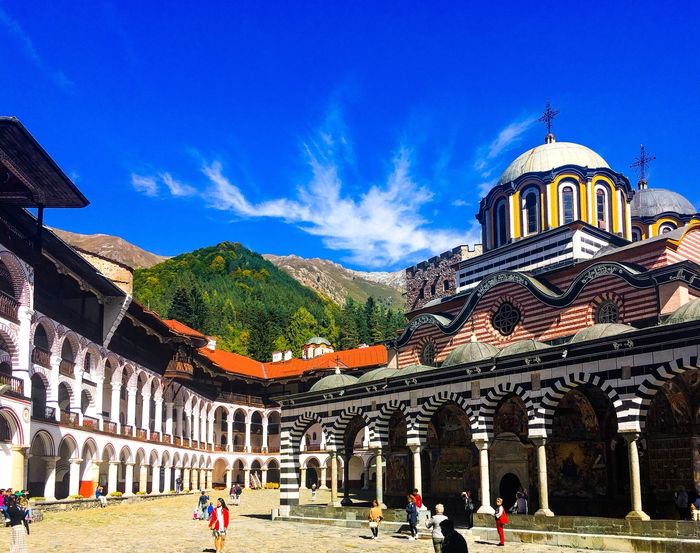
The central courtyard is framed by arcades and buildings with distinctive striped patterns. Inside the main church, vivid frescoes cover walls and ceilings with religious scenes and figures. Look closely at the painted details and carved woodwork, which reflect the skill of Bulgarian artists and craftspeople.
Take time to explore at a respectful pace. Rila Monastery remains an active religious site, so visitors should dress modestly and follow posted guidance. Check current opening information before traveling, as visitor access and arrangements may vary.
Plan a day trip from Sofia
Rila Monastery is a popular excursion from Sofia, and the mountain journey is part of the experience. Allow time for travel, walking, and a relaxed visit. Comfortable shoes are useful around the courtyard and nearby paths, while layers can help with changing mountain weather.
For help arranging a private visit or planning a cultural route, contact our team. A customized tour can account for your schedule, interests, and preferred pace.
Travelers interested in Bulgaria’s ancient past can also explore the Thracian Tomb of Kazanlak, a site known for its historic painted chamber and archaeological significance.
Connect Bulgaria with Turkey’s heritage
Visitors continuing through the region can discover the history of the Ottoman Empire in Istanbul, where palaces, mosques, and neighborhoods reflect centuries of change. In Ephesus, the Agora of Ephesus offers a glimpse of ancient trade and public life.
Experience Rila Monastery with local insight
Rila Monastery brings together mountain scenery, religious art, and Bulgarian history in one remarkable setting. With thoughtful planning and local context, visitors can appreciate both the details of the complex and its continuing cultural importance. Add the monastery to your Sofia itinerary for a memorable experience beyond the capital.